Welcome

Welcome to Dragoon Films!

We are a production company located in Denver Colorado. If you are looking to have a video produced by us, check out our professional videos. If want to see fun videos we make around Colorado, check out our blog down below.


Professional Work

Social Networks

Showing posts with label fun. Show all posts

Wednesday, March 21, 2018

How to Succeed at The 48 Hour Film Project

Here at Dragoon Films, we have participated in the Denver 48 Hour Film Project every year since 2011. I love doing The 48 Hour Film Project because it gives me the motivation to get people together and make a short film. Sometime the movie isn't always great, but I've never been late with a project and I always have a fun time making it. My name is Ross and I've been the producer, writer, and director of all our 48 hour films. Every year I learn how to do as much as I can in the limited time that we are given for the weekend and I want to share how I do these projects in pre-production, writing, production, and post production.

Pre-Production
Having a solid plan for your film before the weekend even hits is by far the most important step for success. The best part about this step is that you don't have to do it within the 48 hours, you can plan weeks in advance. When I first started, I looked up all the genres and tried to think of a basic story for each one, but this didn't really help because then injecting the character, prop, and line into the generic story I came up with made things messy. So for the past few years I haven't worried about the story until I got all the elements for the weekend. The time best spent in pre-production is organizing your team and securing your locations. I call every actor, composer, and crew member I know and see if they are free and willing to help out for the weekend. I'd also call friends that have no experience in film making because they can help with gear, food runs, and be extras. Next I'll think about any location that I can use and what kinds of characteristics they have that would work toward certain stories. These locations can be as easy as friend and families houses or public parks, but also think of places like bars, stores, gyms, or anything that you think you can conceivably use. Call the owners of these places and see if they let you use their place. People are excited to be a part of films, you'll get more yeses than you think! You likely won't use all the locations you secure, but it's good to have more options when the time comes. Once you have all the possible people and locations for your film, you'll have a much better idea of what to write.

Writing
On the first night after I get the elements for the film, I brainstorm ideas with the other people I'm writing with and we write our script. I make a rule for myself that the script has to be done before I go to sleep on the first night. 48 hour film festivals can differ slightly on the rules, but for the 48 Hour Film Project you draw a genre for you film, then you are given a line of dialogue, a character, and a prop that has to be included in your film. I like to try to write the script around these elements because the story feels more coherent. The toughest part for me is always the character because they are given a first and last name as well as a profession or title that you have to work into the final project. The films that don't include this as part of the story tend to have an odd interaction where the characters randomly state what they do for a living. I try to not make my script too complicated due to the limited time. I generally shoot for just a few characters and a couple locations. After you are done with the script let your cast and crew know where the first location of the day will be and what time. Next go over the script and make a shot list so you know exactly which shots you'll need to set up for the next morning. I like to put together a call sheet to send out to everyone for the next day as well as have all my legal documents printed out and ready to go.

Production
The very first thing I do when people start arriving is have them sign release forms. These forms are a pain in the butt all weekend long, but they have to be done, so keep on them! The second day is dedicated entirely to shooting everything you need. In the limited time you have this weekend, re-shoots are unlikely which is why it is important to stick to a shot list. Every time you complete a shot, cross it off the list. The production day is the longest and most physically taxing so keep your cast and crew happy. Have snacks available all day and have a good lunch break. The most important rule in the production phase is to have fun! The 48 Hour Film Project is entirely for enjoyment, so if you all end up yelling at each other, it's not worth it.

Post Production
After we are done shooting I immediately go home and upload the footage to my computer and put together a rough cut before going to sleep. The rough cut doesn't have any music, color correction, or sound mixing, I use it as base to make my job easier for the last bit of the project. The final day is entirely devoted to editing. It can get mind numbing by myself so I like to recruit someone to hangout with me to go get food, bounce ideas off of, and just provide company. Simplicity is key, don't over edit and waste time, this is the final stretch! Give yourself plenty of time to render, upload your final film to a flash drive, and drive to the turn in point. I've seen too many teams turn in their project late due to technical problems. Once you get your film in, celebrate! You just completed you 48 hour film!

Tuesday, May 2, 2017

Starfest 2017 - Cosplay

Tuesday, August 30, 2016

Colorado Springs Comic Con - Art and Cosplay

Tuesday, January 20, 2015

Dragoon Film Recommendations: Hot Fuzz

I don't think I have ever laughed harder in any movie than I did in Hot Fuzz. There are so many small moments among the fast paced editing that makes repeat viewings a lot of fun and almost necessary. From Edgar Wright and Simon Pegg (behind Shaun of the Dead and The Worlds End) This is a must see!

Wednesday, December 10, 2014

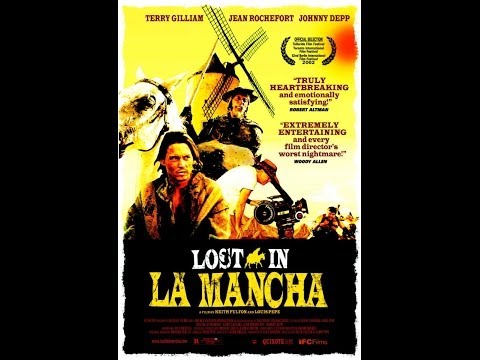
Film Making Tips Day 19: Lost in La Mancha

What can go wrong while making a movie? Actually a lot! But there are very few instances of productions where absolutely everything goes wrong. The documentary Lost in La Mancha is about the making of the Terry Gilliam film that was never completed. The movie was going to be a take on the classic story Don Quixote, starring Johnny Depp. This documentary is a great look at all the elements that go into making a film and how those elements can ruin a production. A great watch for anyone who wants an inside look at the making of a movie (even though that movie is a disaster).

As an added bonus, this movie is on Netflix!

Tuesday, December 9, 2014

Film Making Tips Day 18: 180 Degree Rule

The 180 degree rule is a concept used in cinematography to keep the audience oriented to the space of a scene. The basic idea is to draw an imaginary line in down the center of two subjects that are talking to each other and keep the camera on one side of that line. This helps avoid confusion on where the characters are in the scene and which way they are facing.


This video highlights the 180 degree rule:


This rule is more like a guideline for newer filmmakers, but can be broken:

Monday, December 8, 2014

Film Making Tips Day 17: Rule of Thirds

The basis of shot composition in either film or photography is the rule of thirds. This splits up your shot into several sections and making is easier to find the best place in the frame for your subject.

Saturday, December 6, 2014

Film Making Tips Day 16: Source Filmmaker

Sometimes as a filmmaker, I lack actors. Though in this case I generally use animals, but another great solution would be to use animation. But if you are anything like me, you don’t have much of a talent for this. That’s where Source filmmaker comes in!

You don’t have to know anything about animation, you just play video games and record it. The possibilities are endless when making a movie on this software, and the best part is it’s free!

Friday, December 5, 2014

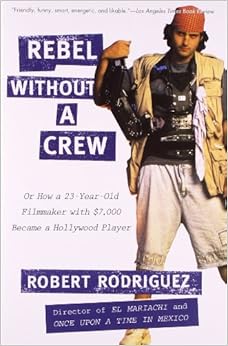
Film Making Tips Day 15: Rebel Without a Crew

Robert Rodriguez is the writer and director of such films as Sin City, Desperado, and Spy Kids. He has become one of the most influential people for young filmmakers because of how he got his start by making his first film, El Mariachi, for just seven thousand dollars. The whole process of making this film is described in his book Rebel Without a Crew.

The book is written as a personal journal and details how he raised money through medical testing, the production process, and how he ended up selling it and becoming the filmmaker that he is today. This is a definite read for anyone who thinks that the lack of money gets in the way of making their first movie.

Thursday, December 4, 2014

Film Making Tips Day 14: Recording Sound

Good quality sound can go further in making your movie look professional than good quality visuals. I've talked about some of the tools before. At Filmmakeriq, they made a very in depth video on how to capture good sound, and it is so detailed, I can’t summarize it here. So you should just watch it!

Wednesday, December 3, 2014

Film Making Tips Day 13: Softboxes

We already talked about three point lighting. For this entry we are focusing on just the fill light. Specifically the softbox! Like we said before, there are alternatives, but a softbox helps with directing your light. JustEyeballIt from youtube has a fantastic tutorial on how to make one:

In this video he uses a box from Ikea, but this can also be made from cardboard if you are up for the extra work. Also when using your softbox, make sure to monitor the temperature of your light so it doesn’t start a fire! While you will save money building your own, there are decent prices for them online if you’d like to forgo the building process. You’ll spend time or money, but either way you’ll pay!

Tuesday, December 2, 2014

Film Making Tips Day 12: Free Audio Editors

Having good sound is essential in having a professional looking movie. To do that, we need the proper software to get the cleanest sound possible. My favorite program to use is Audacity. Often I will bring my laptop onto a set and record the sound directly into Audacity so I can start editing the sound right away. This is a fantastic free software that has all kind of tools to clean up your audio and make it sound as good as possible.

Download Audacity here!

Here are a couple more free options that I found:
Jokosher
LMMS

Having good sound also requires good equipment.

Monday, December 1, 2014

Film Making Tips Day 11: Camera Slider

A camera slider can be a decent alternative to the dolly rigs we talked about the other day. They are more compact and easier to make, but don’t have the same versatility. Here is a great video on how to make your own: